
Bleeding or swollen gums?
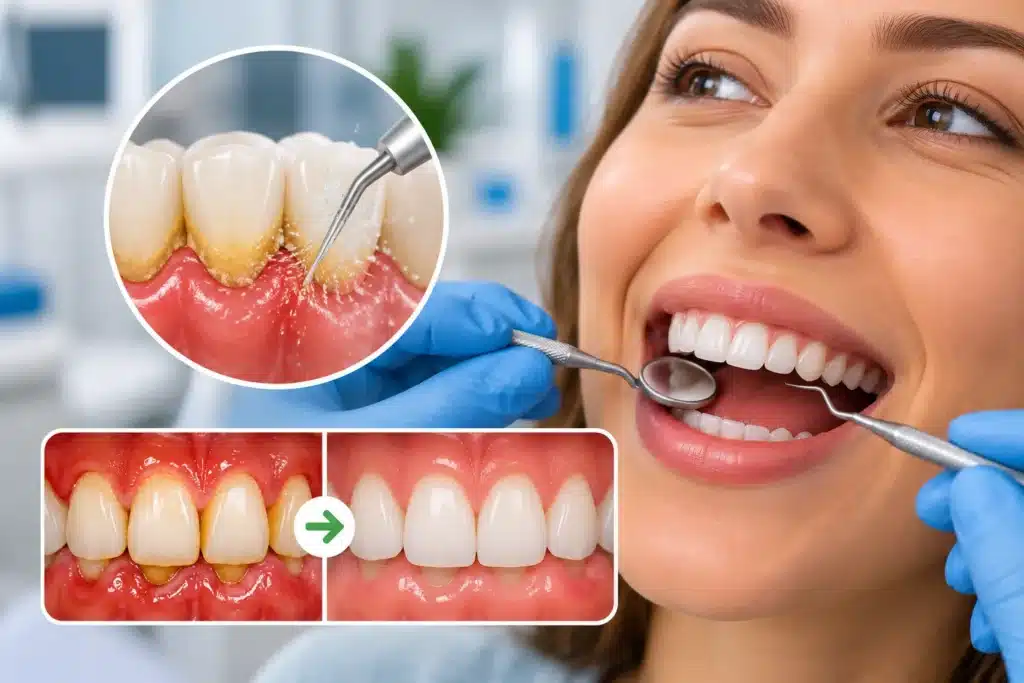
Gum Disease Treatment in Guelph
Gum disease treatment at York Road Dental in Guelph: gingivitis and periodontitis care with deep cleaning. Open Saturdays. Direct billing and CDCP.
Gums that bleed, swell or recede should be checked. Book a gum check online or call (519) 824-7333.
What Are the Signs of Gum Disease?
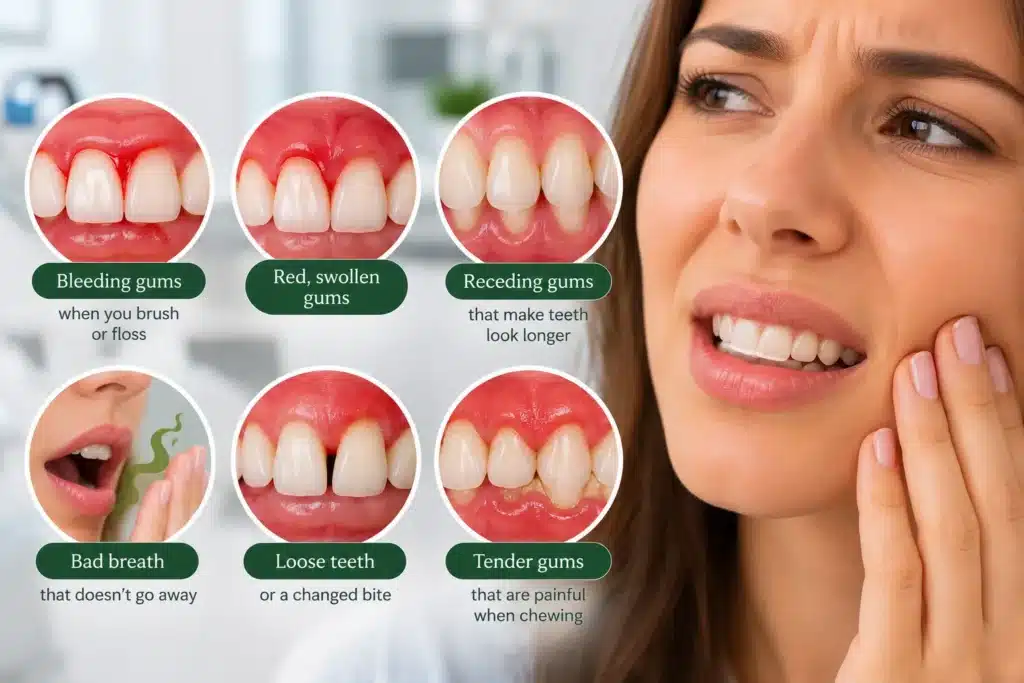
The signs of gum disease are gums that bleed, swell, redden or pull back from the teeth, and breath that stays bad. Gum disease often does not hurt at first, so the signs matter. Watch for these:
Bleeding gums when you brush or floss
Red, swollen or tender gums
Receding gums that make teeth look longer
Bad breath that does not go away
Loose teeth or a changed bite
Gum disease starts with plaque, a sticky film of bacteria. If plaque is not removed, it hardens into tartar, which only a hygienist can remove, and the bacteria inflame the gums. Over time the inflammation can reach the bone under the gums and loosen teeth.
Why do my gums bleed?
Gums bleed when plaque builds up along the gumline and inflames them. Bleeding gums are often the first sign of gingivitis, and they are not normal, even if brushing seems to cause them. Book a check rather than brushing less.
Receding gums can come from gum disease, from brushing too hard or from grinding, and your dentist finds the cause.
Gingivitis or Periodontitis: What Is the Difference?
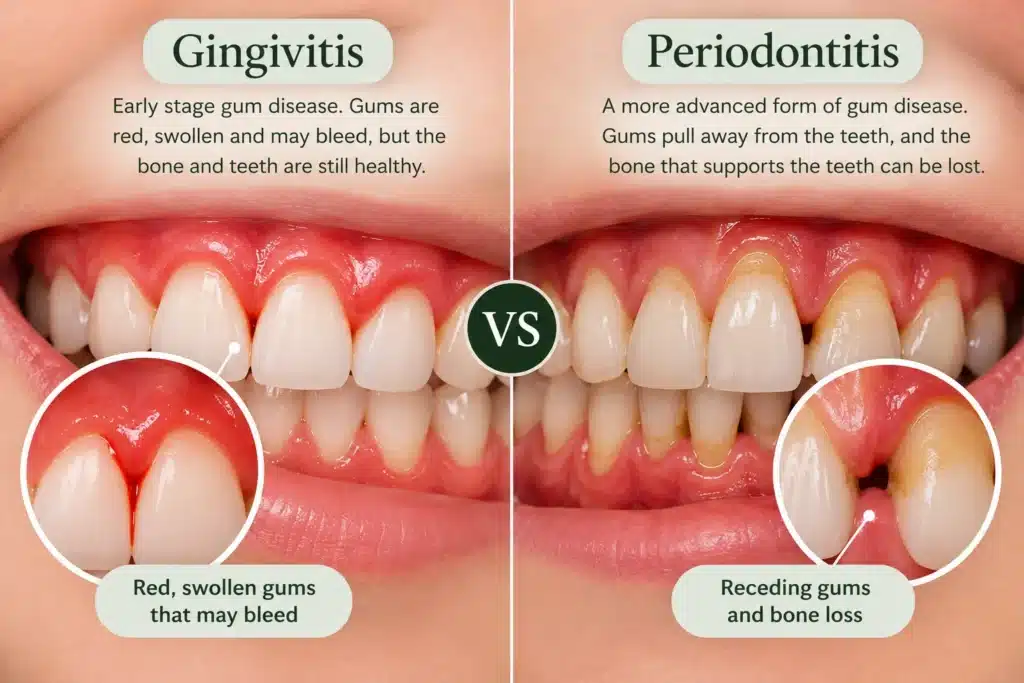
Gingivitis is early, reversible inflammation of the gums, while periodontitis is gum disease that has spread to the bone that holds your teeth. Gum disease starts as gingivitis when plaque stays on the teeth, and it can progress to periodontitis if it is not treated.
Feature
Gingivitis
Periodontitis
Where
Gums only
Gums and bone
Reversible
Often yes
Not fully
Treatment
Cleaning, home care
Deep cleaning
Gingivitis treatment is usually a thorough cleaning and better home care. Periodontitis treatment starts with a deep cleaning, and we tell you what your gums need after an exam.
Some people are more likely to get gum disease: smokers, people with diabetes, people who are pregnant or going through hormone changes, those who take certain medications and those with gum disease in the family.
Other things add to the risk:
Heavy plaque from missed cleaning
Crooked teeth that are hard to clean
Missing regular dental visits
The American Dental Association's MouthHealthy gum disease page describes gingivitis as the early stage, still reversible, usually with a professional cleaning plus daily brushing and flossing, and periodontitis as advanced disease that causes loss of the tissue and bone that support the teeth.
What Is Deep Cleaning for Gum Disease?
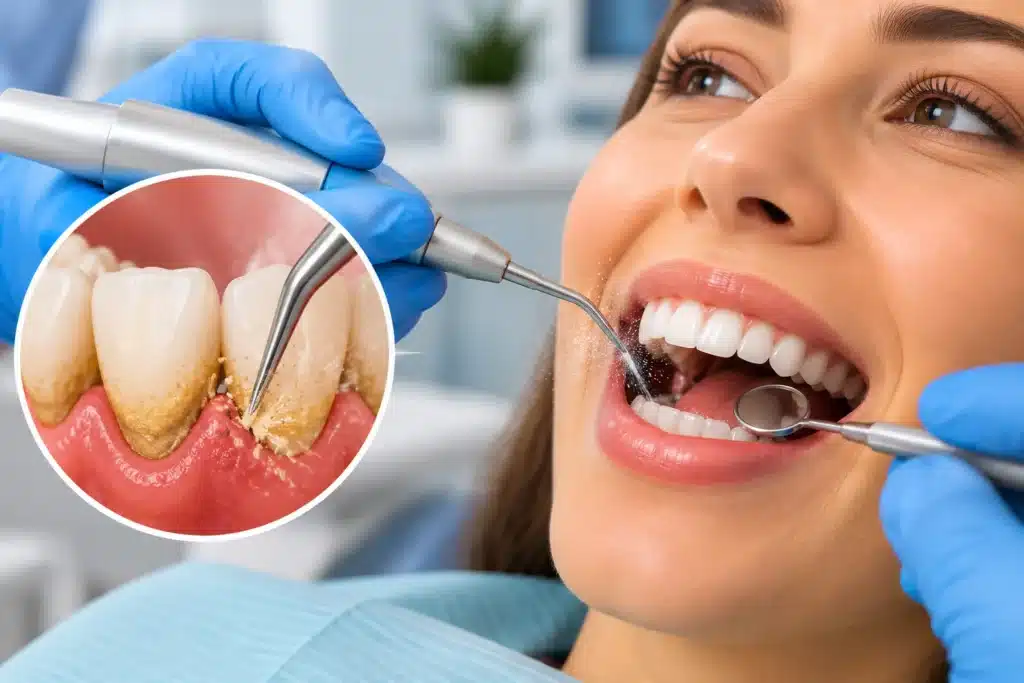
Deep cleaning is scaling and root planing, a treatment that cleans below the gumline where plaque and tartar sit. Deep teeth cleaning removes the buildup, and it smooths the root surfaces.
What is scaling and root planing?
Scaling removes plaque and tartar from the teeth and just below the gumline. Root planing smooths the root surfaces so bacteria find it harder to cling. The treatment can be done in more than one visit.
A deep cleaning follows this order:
Deep cleaning can leave your gums tender and your teeth sensitive for a few days. We explain what to expect before we start.
You can use a stop signal at any time, and we use numbing gel and offer breaks.
Dr. Natasha Kaushal has been registered with the RCDSO as a general dentist since 8 June 2018. Advanced cases are referred to a periodontist, and your dentist tells you if yours needs it.
What Happens After Gum Disease Treatment?
After treatment you come back for follow-up visits so we can check that your gums are healing. Your gums may feel tender for a few days, and they may bleed a little at first.
Brush gently twice a day with a soft brush
Clean between your teeth every day
Eat soft foods while your gums are tender
Keep every follow-up and cleaning visit
Regular check-ups and cleanings keep gum disease from coming back, and your dentist sets how often you need them. Smoking is a risk factor for gum disease.
If your gums stay sore, swollen or bleed more instead of less after a week, call us, because they may need another look. Use a soft toothbrush and a small interdental brush, and ask your hygienist to show you how.
If you have severe swelling, trouble breathing or bleeding that will not stop, call 911 or go to the nearest hospital emergency department.
Can Gum Disease Be Cured?
Gingivitis can often be reversed, but we do not promise a cure for periodontitis; it can be managed. Treatment aims to stop the infection from spreading, and daily care and regular visits help control it. We do not promise a cure, because periodontitis involves loss of the tissue and bone that support the teeth.
Is Bad Breath a Sign of Gum Disease?
It can be. Persistent bad breath is a common sign of gum disease, because bacteria under the gums give off a smell. Other causes are possible, so we check. Read about bad breath treatment.
Questions About Gum Disease
Does gum disease hurt?
Gum disease can be painless until it is advanced, which is why York Road Dental advises a check when gums bleed, swell or smell. We cannot promise a painless visit.
Can I prevent gum disease?
York Road Dental advises brushing twice a day, cleaning between your teeth, not smoking and keeping your cleanings, because plaque that is removed cannot harden into tartar. We check your gums at every check-up.
How do you check for gum disease?
York Road Dental checks your gums, measures the pockets around each tooth and looks at X-rays of the bone. A first visit also includes your health history.
How Do You Pay for Gum Disease Treatment?
The cost depends on how much treatment your gums need, so we do not list one price here. Ask our team about your cost and about in-house payment plans. All major insurers can be direct-billed, and CDCP claims are billed directly to the plan. See fees and insurance.
Co-payments and other charges may apply, so ask our team about costs before treatment. The Government of Canada describes the plan on its Canadian Dental Care Plan page.
Book Your Gum Check in Guelph
Book a gum check at York Road Dental and your online booking goes straight into our calendar. If you are due a cleaning anyway, ask for both.