
Extractions and oral surgery
Tooth Extractions and Oral Surgery in Guelph
Tooth extractions and oral surgery at York Road Dental in Guelph: simple and surgical extractions, crown lengthening and bone grafts. Open Saturdays.
A tooth can be taken out the same day when needed. Book online or call (519) 824-7333.
When Does a Tooth Need to Come Out?
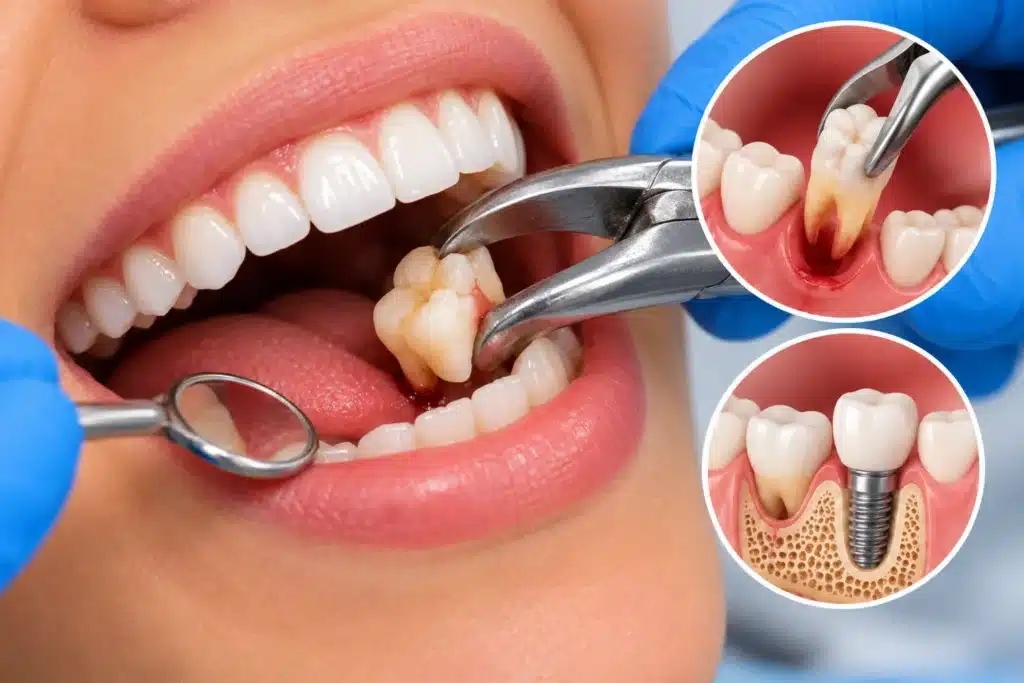
A tooth needs to come out when it cannot be saved or when keeping it puts your health at risk. We try to save your natural tooth first, and your dentist explains the choice tooth by tooth. These are common reasons for tooth extraction:
Severe decay that reaches the root
An infection that treatment cannot clear
A tooth broken below the gumline
Advanced gum disease that loosens the tooth
An impacted tooth, such as a wisdom tooth
Sometimes a tooth is removed to make space for other dental work. If a root canal can save the tooth, we say so first. See root canal therapy for that choice, and call us for same-day emergency care if you have pain or swelling.
You do not need to wait until a tooth hurts. A tooth that is loose, cracked below the gum, or that has a bad taste or a pimple on the gum near it should be seen soon.
Simple or Surgical Tooth Extraction?
A simple extraction removes a tooth you can see, while a surgical tooth extraction removes a tooth that is broken, impacted or hard to reach. York Road Dental does both, and your dentist advises which one your tooth needs.
Simple extractions
For a simple extraction, the area is numbed, the tooth is loosened and lifted out. It is usually quick, and the area is numbed first.
Surgical extractions
For a surgical extraction, the dentist makes a small opening in the gum and sometimes divides the tooth into pieces, so that it comes out safely. Surgical removal is common for impacted teeth, such as wisdom teeth.
Molar extractions
A molar extraction can be simple or surgical, because molars have large roots. Your dentist looks at X-rays first.
Feature
Simple
Surgical
Tooth
Visible, intact
Broken or impacted
Gum
Not opened
Small opening
Time
Often shorter
Often longer
Dr. Natasha Kaushal, who leads York Road Dental, has been registered with the RCDSO as a general dentist since 8 June 2018.
What Happens During a Tooth Extraction?
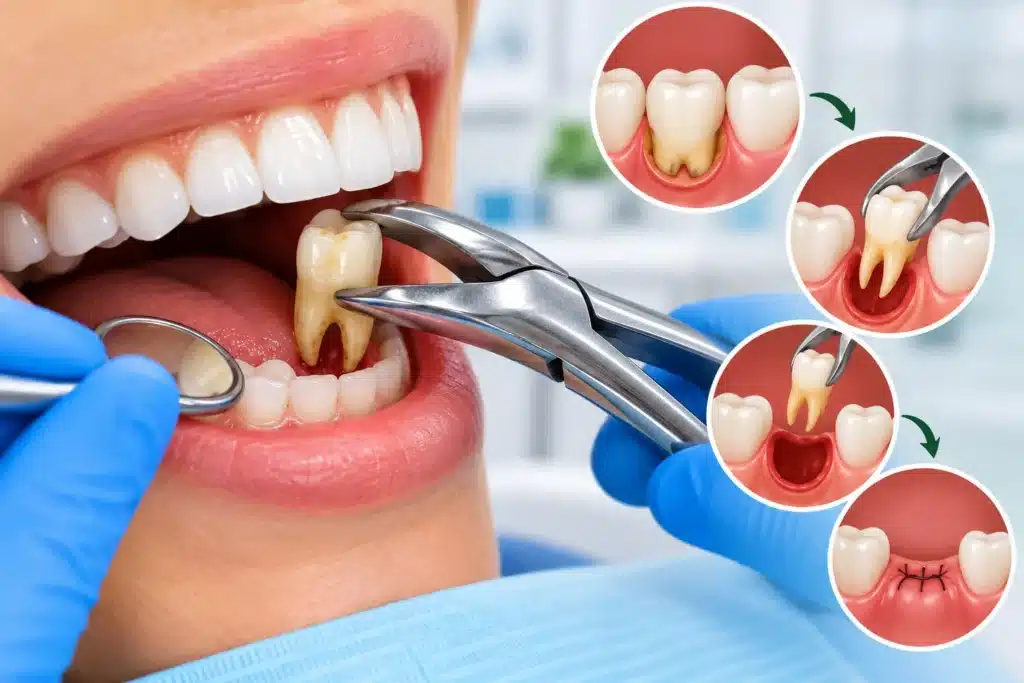
An extraction starts with an exam and X-rays and ends with advice for healing. These are the steps:
You can use a stop signal at any time, and we use numbing gel and offer breaks. We cannot promise a painless visit.
Tell us about your health history, your medications and any allergies when you book, so that the plan fits you. If you take blood thinners, tell us before the visit, because that can change how we manage bleeding.
How Do You Recover After an Extraction?
Some swelling and tenderness are common after an extraction. Follow these steps in the first days to help the blood clot form and the gum heal:
Bite on the gauze as shown
Rest, and use a cold pack on your cheek
Eat soft, cool foods on the other side
Do not rinse hard, spit or use a straw
Do not smoke while the socket heals
Dry socket happens when the blood clot is lost from the socket, and it causes pain. Call us if pain gets worse instead of better or if swelling grows. If you have severe swelling, trouble breathing or bleeding that will not stop, call 911 or go to the nearest hospital emergency department.
Keep brushing your other teeth as usual, and clean around the area gently after the first day.
The American Dental Association's MouthHealthy extractions page advises a cold cloth or ice bag for swelling, no straw for 24 hours, no hard rinsing for the first few days and no smoking, and its dry socket page says to notify your dentist.
What Are Crown Lengthening and Bone Grafts?
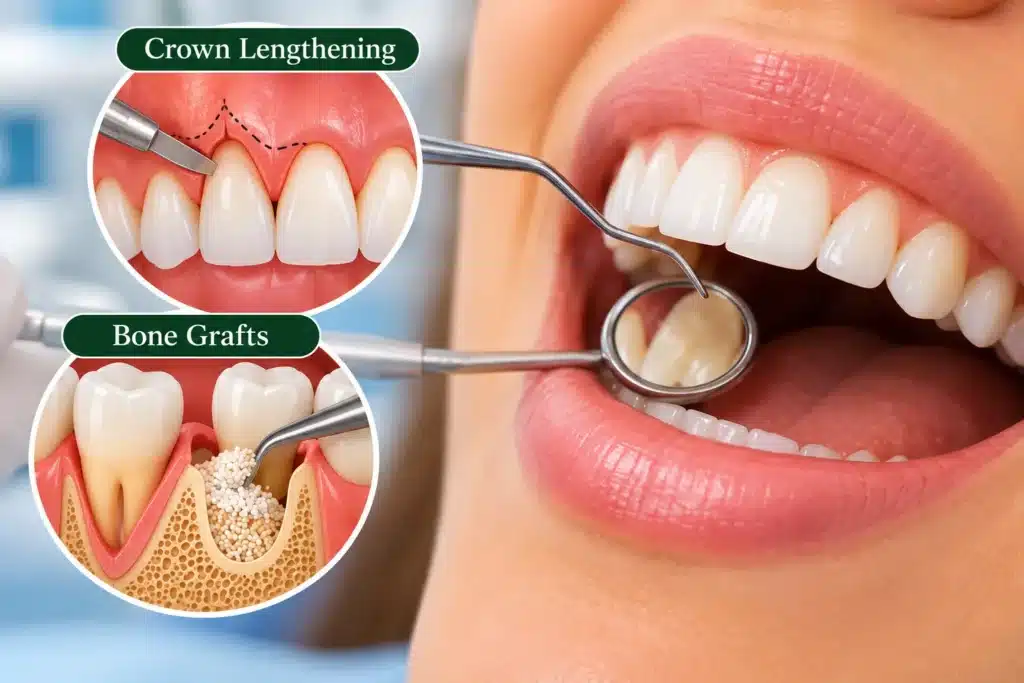
Crown lengthening and bone grafts are two other oral surgery procedures we do. Both prepare the mouth for restorative work or for tooth replacement.
Crown lengthening
Crown lengthening reshapes the gum, and sometimes the bone, so that more of a tooth shows. It helps when a tooth is broken below the gumline or has too little tooth above the gum to hold a crown.
Bone grafts
A bone graft adds bone material to a site where bone has thinned, for example after a tooth is removed. It can rebuild the ridge so an implant has a firm base, and it takes time to heal. Your dentist explains whether you need one.
How Can You Replace the Tooth Afterwards?
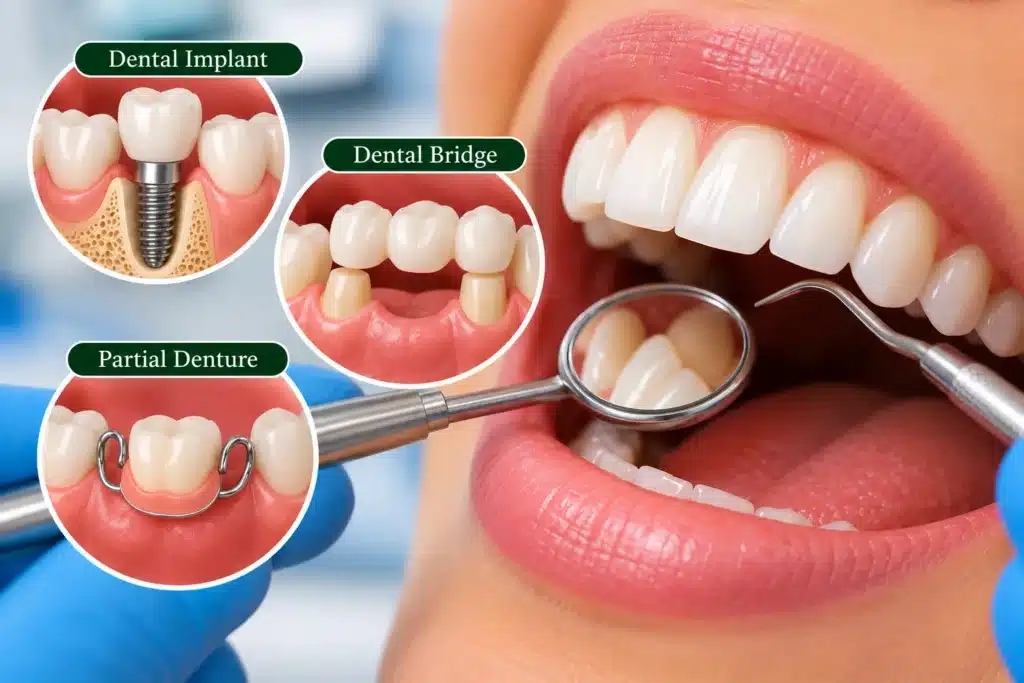
After an extraction you can leave the gap or replace the tooth, and your dentist explains how a gap can affect your bite and neighbouring teeth. The options are:
Dental implants: a post and crown
Bridges: held by neighbouring teeth
Partial dentures: a removable option
A visiting dentist places implants, and Dr. Kaushal makes the crown. If the tooth is a wisdom tooth, a replacement is often not needed. Read about wisdom teeth removal.
Can You Get a Tooth Out the Same Day?
Yes, when needed. A tooth can be taken out the same day as the exam or emergency visit, if it is safe and the tooth cannot be saved. Same day tooth extraction depends on the tooth, your health and the day.
Call (519) 824-7333 and tell us what is wrong. We offer same-day emergency visits during all opening hours. Read about emergency and same-day dental care.
How Do You Pay for a Tooth Extraction?
Tooth extraction cost depends on the tooth, whether it is simple or surgical, so we do not list one price here. Ask our team about the cost for your tooth, and about in-house payment plans.
All major insurers can be direct-billed, and CDCP claims are billed directly to the plan. You can pay by cash, debit, Visa, Mastercard, American Express or e-transfer. See fees and insurance.
Co-payments and other charges may apply, so ask our team about costs before treatment. The Government of Canada describes the plan on its Canadian Dental Care Plan page.
Questions About Tooth Extractions
Does a tooth extraction hurt?
York Road Dental numbs the area before an extraction, and the area can be sore for a few days afterwards. We cannot promise a painless visit.
What is dry socket?
York Road Dental advises you to call us if pain gets worse a few days after an extraction, because the blood clot may have been lost from the socket, which is called dry socket. Avoid straws, hard rinsing and smoking.
Will I be numb during an extraction?
Yes. York Road Dental numbs the area first, and we use numbing gel, breaks and a stop signal. Sedation is not offered.
Book Your Extraction Visit in Guelph
Book a visit at York Road Dental and your online booking goes straight into our calendar. If you are in pain now, get same-day emergency care.